
What Is In-Home Care for Chronic Illness in Seniors
Living well with a long-term condition is a daily practice, and the right certified caregiver makes each day at home safer, steadier, and more dignified.
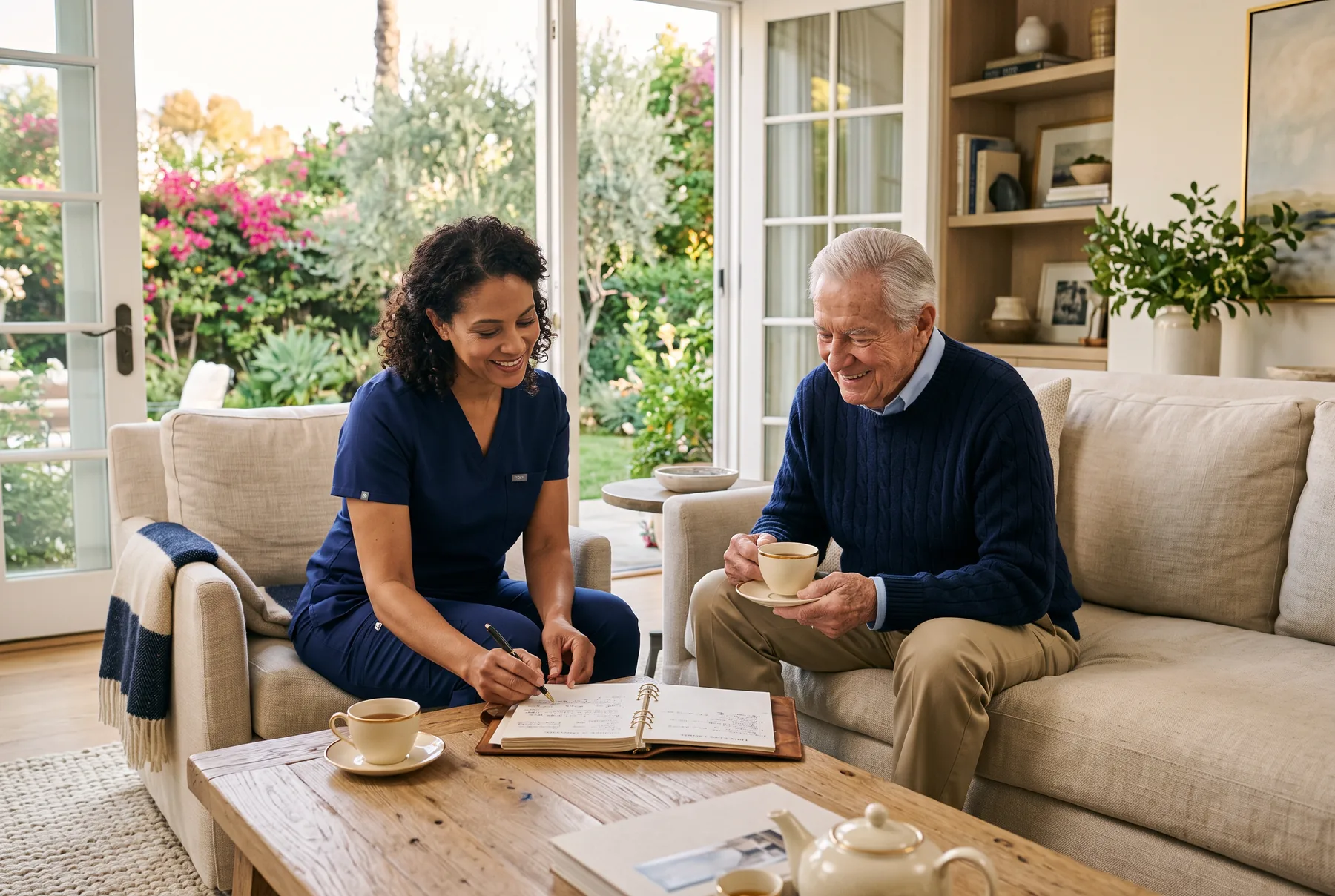
In-home care for chronic illness is professional support — provided in a senior’s own home — that helps manage the daily challenges of living with a long-term health condition. Unlike skilled home health care (which requires a physician’s order), non-medical in-home care focuses on personal assistance, safety monitoring, and quality of life for seniors with conditions like heart disease, diabetes, COPD, Parkinson’s, and Alzheimer’s.
Who Needs In-Home Care for Chronic Illness?
Any senior managing a long-term health condition that affects their ability to perform daily activities independently may benefit from in-home care. Common indicators include difficulty bathing, dressing, preparing meals, managing medications, moving safely through the home, or keeping medical appointments.
What Does a CNA Do for Chronically Ill Seniors?
California Certified Nursing Assistants — the only type of caregiver PremiumCare employs — provide a clinically superior level of in-home support compared to basic home health aides. For chronically ill seniors, CNAs:
- Observe and report changes in condition to the care team
- Offer timely medication reminders so doses stay on schedule
- Assist with bathing, dressing, grooming, and personal hygiene
- Support safe mobility and fall prevention
- Prepare meals that follow the care team’s dietary guidance
- Encourage the gentle activity their physician or therapist recommends
- Provide cognitive engagement for seniors with neurological conditions
The 8 In-Home Care Services That Matter Most for Chronic Illness
1. Medication Management and Reminders
Medication non-adherence is one of the leading causes of hospital readmission among chronically ill seniors. A certified CNA offers timely reminders so medications are taken on schedule, and reports any concerns to the supervising nurse or physician.
2. Trained Clinical Observation
California CNAs complete clinical training that sharpens their eye for subtle changes in condition, which they report the same day to the supervising RN. Early detection of concerning changes can prevent emergency hospitalizations for seniors with heart failure, COPD, or diabetes.
3. Personal Care and Hygiene
Chronic illness often limits a senior’s ability to bathe, dress, and groom independently. CNA personal care services maintain dignity and prevent secondary conditions like pressure sores and infections.
4. Mobility and Transfer Assistance
Parkinson’s, stroke, and arthritis significantly increase fall risk. CNAs use evidence-based safe transfer techniques and assistive device training to keep seniors mobile without injury.
5. Nutrition and Meal Preparation
Therapeutic diets for heart disease, diabetes, and renal conditions require careful meal planning. Our CNAs prepare meals aligned with physician-ordered dietary restrictions, improving chronic disease management at home.
6. Encouragement Between Therapy Sessions
Between formal therapy sessions, PremiumCare CNAs offer gentle encouragement and a steady, supportive presence as seniors keep up the routine their physician or physical therapist has set — the therapy itself remains in licensed hands.
7. Care Coordination and Communication
Our CNAs document observations and communicate changes to the care team, ensuring continuity between home visits, physician appointments, and specialist consultations — a critical gap in most home care programs.
8. Respite for Family Caregivers
Families managing a chronically ill loved one face enormous caregiving demands. Scheduled respite care gives family caregivers in Orange County and the Inland Empire the rest they need to sustain long-term caregiving without burnout.
Scheduled respite care gives family caregivers the rest they need to sustain long-term caregiving without burnout.
In-Home Care vs Skilled Home Health: What’s the Difference?
Skilled home health care involves licensed nurses and therapists providing medically necessary treatment ordered by a physician. Non-medical in-home care covers the personal and daily living support that skilled home health doesn’t — and that seniors need continuously, not just after a qualifying medical event.
How Much Does Chronic Illness In-Home Care Cost in California?
Pricing is personalized to each care plan; after a complimentary consultation, you’ll receive a clear written proposal. Most families choose private pay, and long-term care insurance may help cover care. Medicare generally does not cover ongoing non-medical care at home, and some veterans’ families also explore VA programs.
FAQ
Can in-home care reduce hospitalizations for chronically ill seniors?
Yes. Studies consistently show that consistent in-home care reduces hospital readmissions by improving medication adherence, early symptom detection, nutrition, and fall prevention.
How do I arrange in-home care for a parent with a chronic illness in Orange County or the Inland Empire?
Call PremiumCare at (909) 284-8657 for a complimentary in-home consultation. We match your loved one with a CNA trained in their specific condition.
Call (909) 284-8657 to confirm we serve your area | Contact Us | Services
Related Articles
- How Senior In-Home Care Supports Dementia at Home
- Top 7 Senior In-Home Care Services for 2026
- How to Choose In-Home Care After a Hospital Stay
Related Reading: How to Choose In-Home Care After a Hospital Stay | Top 7 Senior In-Home Care Services for 2026