
Heat Safety for Seniors in Orange County & the Inland Empire: Protecting Older Adults Through Extreme Heat
In an Orange County and Inland Empire summer, heat illness can look like simple tiredness. Here is how to recognize it early and keep a loved one safe.
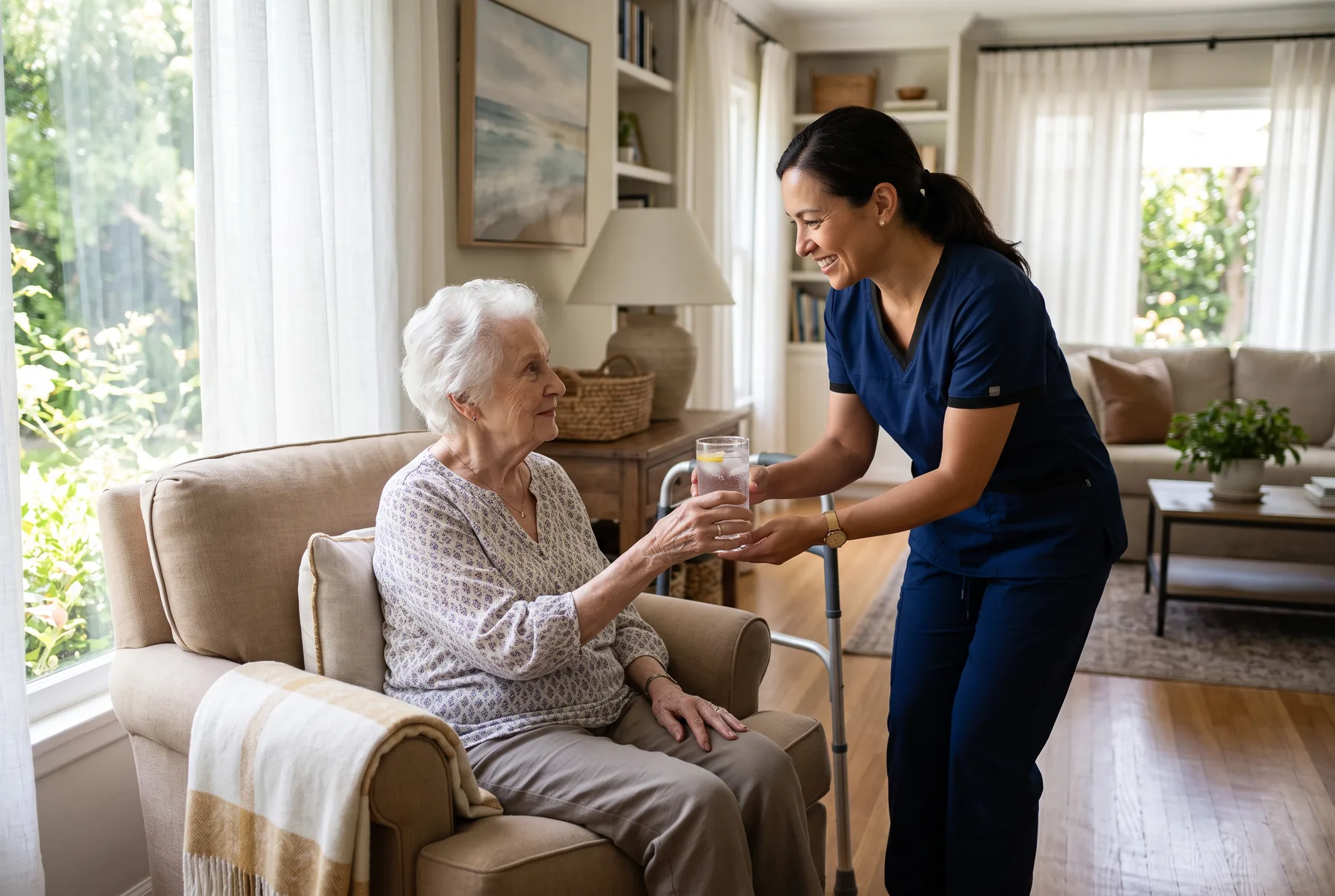
Every summer, emergency departments across Orange County and the Inland Empire see a predictable surge: older adults arriving dehydrated, confused, or dangerously overheated. The Inland Empire runs hotter than coastal Southern California — often by fifteen or twenty degrees — and stretches of triple-digit days are simply part of life here from June well into October. For a healthy adult, that means discomfort. For an aging parent living alone, it can mean a medical emergency.
The difficult part is that heat-related illness rarely announces itself clearly in older adults. It looks like tiredness, or confusion, or “just not feeling right.” By the time it is obvious, it is often already serious. This guide covers why seniors are so much more vulnerable to heat, the warning signs families should know, and the practical steps that keep an older adult safe at home through an Orange County and Inland Empire summer.
Why Heat Is More Dangerous as We Age
Older bodies regulate temperature less efficiently, and several changes stack on top of each other:
- Reduced sweating. Sweat is the body’s primary cooling system, and sweat production declines with age. Less sweat means less cooling.
- A blunted thirst signal. Many older adults simply do not feel thirsty until they are already dehydrated, so they drink too little without realizing it.
- Chronic conditions. Heart disease, diabetes, and kidney problems all interfere with how the body handles heat and fluid balance.
- Medications. Diuretics, beta-blockers, some antidepressants, antihistamines, and certain Parkinson’s medications can reduce sweating, increase fluid loss, or impair the body’s temperature response.
- Limited mobility. A senior who cannot easily get up to refill a glass of water, close a blind, or move to a cooler room is at the mercy of their environment.
Add a fixed income and a reluctance to run the air conditioning because of the electric bill — something we hear constantly from local families — and the risk compounds quickly.
Warning Signs Families Should Know
There are two escalating stages, and the difference matters enormously.
Heat exhaustion is the body struggling but still coping. Watch for heavy sweating, cool and clammy skin, muscle cramps, weakness or fatigue, dizziness, headache, nausea, and a fast but weak pulse. This is the point to intervene: move them somewhere cool, have them sip water, apply cool damp cloths, and stay with them.
Heat stroke is a medical emergency. The signs are different in a way that is easy to miss: skin that is hot and dry rather than sweaty, a body temperature at or above 103°F, confusion or slurred speech, a rapid strong pulse, and possible loss of consciousness. If you see these, call 911 immediately, move the person to a cool place, and begin cooling them with damp cloths or a fan while you wait. Do not give fluids to someone who is confused or not fully alert.
The signal families most often miss is confusion. New disorientation in an older adult during a heat wave should be treated as a heat emergency until proven otherwise — not dismissed as ordinary forgetfulness or a bad day.
New disorientation in an older adult during a heat wave should be treated as a heat emergency until proven otherwise.
Practical Steps That Prevent Heat Emergencies
Most heat-related hospitalizations are preventable with unglamorous, consistent habits:
- Build a hydration routine rather than relying on thirst. A glass of water at set times — with morning medications, mid-morning, lunch, mid-afternoon, dinner — works far better than “drink when you’re thirsty.” Water-rich foods like watermelon, cucumber, and soup help too.
- Cool the house before the heat arrives. Close blinds and curtains on the sun-facing side in the morning, before the house heats up. It is far easier to keep a house cool than to cool one down.
- Shift activity to early morning. Errands, walks, gardening, and appointments belong before 10 a.m. or after sunset. The stretch from 10 a.m. to 6 p.m. is when the risk peaks.
- Dress for it. Loose, lightweight, light-colored cotton clothing. A wide-brimmed hat for any time outdoors.
- Have a cooling plan for power outages. Summer grid strain is real in Orange County and the Inland Empire. Know the nearest cooling center, and keep a plan for where your loved one goes if the power fails during a heat wave.
- Do not let cost drive the thermostat. If an older adult is avoiding air conditioning because of the bill, look into utility assistance programs and medical baseline rates. An ER visit costs vastly more than a month of cooling.
- Check in daily during heat waves. A phone call is good. Eyes in the home are better — heat-related confusion is much easier to spot in person than over the phone.
Special Considerations for Memory Loss and Chronic Illness
Seniors living with dementia face compounded risk. They may not recognize that they are overheated, may not remember to drink, may dress in heavy clothing on a hot day, or may wander outdoors at the worst possible hour. For these families, structured supervision during heat season is not optional. Our dementia and Alzheimer’s care builds hydration, cooling, and safety checks directly into the daily routine.
Chronic conditions deserve the same attention. Heat raises cardiac workload, which matters for anyone with heart failure. It changes fluid balance and can affect blood glucose in seniors managing diabetes. And any senior on diuretics is losing fluid by design — which means hydration needs active management, not guesswork. Coordinating this alongside a medication schedule is part of routine personal care support.
How CNA-Level Care Changes the Picture
This is where staffing genuinely matters. Premium Care In Home Care Services is a home care agency serving Orange County and the Inland Empire staffed 100% by Certified Nursing Assistants. Every caregiver who enters a client’s home has completed state-certified clinical training.
In practice, during a heat wave, that means the caregiver in the home can:
- Recognize the early, subtle signs of heat exhaustion — including the confusion that families so often miss
- Distinguish heat exhaustion from heat stroke and know that hot, dry skin means call 911 now
- Track fluid intake meaningfully rather than guessing
- Understand which of a client’s medications increase heat risk
- Safely assist with cooling measures, bathing, and repositioning
- Notice a change in condition and escalate to the family or physician before it becomes an emergency
A companion aide can offer a glass of water. A CNA knows what a client’s confusion at two in the afternoon in August might actually mean. Through companionship and homemaking visits, that clinical judgment is present in the home on the days it matters most.
Family caregivers feel the strain of heat season too — the extra check-ins, the worry on triple-digit days, the disrupted sleep. Respite care gives families reliable coverage so no one is carrying that alone. Some veterans’ families also explore VA programs alongside private care.
Getting Help Before the Next Heat Wave
The families who get through Orange County and Inland Empire summers without an emergency are rarely the ones who reacted fastest. They are the ones who put support in place before the temperature climbed.
If you are worried about a parent or spouse managing the heat alone, we are glad to talk it through, whether or not you decide to work with us.
Call (909) 284-8657 or request a complimentary consultation. No obligation, no pressure — just a clear conversation about what your loved one needs to stay safe at home.
Premium Care serves families across Orange County and the Inland Empire. Call (909) 284-8657 to arrange a complimentary consultation.